Do Metaphors Matters?
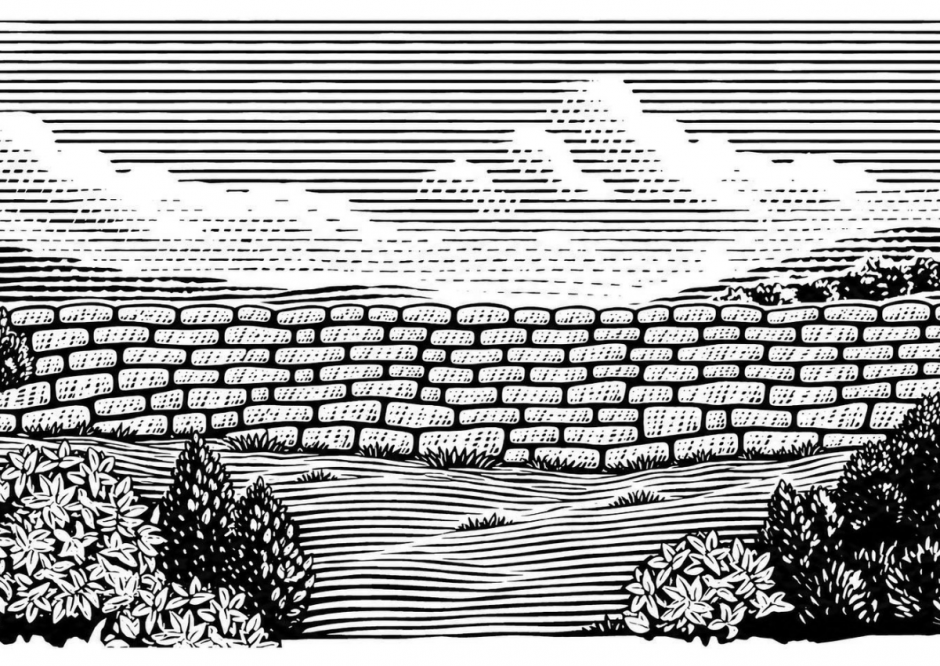
Jonathon Cherne November/December 2026The “wall of separation between church and state” is increasingly in the crosshairs of influential politicians, judges, authors, and evangelical leaders. They denounce this idea as a distortion of the Constitution and a weapon against people of faith. They argue that the phrase appears nowhere in the Constitution and is based on bad history. In June 2026 that argument took a giant leap forward from campaign rhetoric and Sunday morning pulpits to the president’s desk. The Presidential Religious Liberty Commission delivered a draft report urging the United States government to replace the old familiar wall that separated church and state with a bridge that links them together. This raises the question: Does the Constitution erect a wall or build a bridge between the government and the church?
It is true: the actual phrase “wall of separation of church and state” does not appear in the Constitution. But neither does the phrase “presumption of innocence,” “right to remain silent,” “right to marry,” or “right to privacy,” to name a few. Yet no serious American citizen would conclude that those principles are therefore imaginary. Indeed, there are many constitutional principles that are not specifically stated in that grand document. If constitutional principles existed only when their exact wording appeared in the text, then many familiar constitutional doctrines would be in serious doubt. The constitutional question, therefore, is not whether a particular phrase appears in the text, but whether the underlying principle is fairly derived from the Constitution’s language, structure, and history.
The principle of “separation of church and state” works the same way. The phrase became famous from Thomas Jefferson’s description of a “wall of separation” in his letter to the Danbury Baptists, and through the Supreme Court’s later use of that language to explain the First Amendment. But that it is a summary of a constitutional principle does not depend on Jefferson’s letter, or on absence of its specific mention. It depends on the constitutional text, the founding-era struggle against religious establishments, and more than a century of judicial decisions.
“Separation” in the Constitution
The wall of separation between church and state is shorthand for the constitutional limits rooted chiefly in the First Amendment’s religion clauses: “Congress shall make no law respecting an establishment of religion, or prohibiting the free exercise thereof.” The establishment clause denies government the power to establish, sponsor, favor, or control religion. The free exercise clause denies it the power to suppress individual’s religious belief and practice. Together they mark a clear constitutional boundary between government and religion: government may neither direct the people’s faith nor punish them for exercising it.
Article VI’s ban on religious tests for public office reinforces the same constitutional principle of keeping religion and state separate. It shows that public authority is entirely independent of religious profession, affiliation, or belief. The ability to hold a public office does not belong more fully to Christians, or less fully to an atheist or member of a minority faith.
Calling this arrangement “a wall of separation” does not mean that government and religion are opposed to each other. Separation is not hostility to religion. We build a fence around our property not because we are opposed to our neighbor, but so the rights of each can be protected. The fence clearly marks where our jurisdiction ends and where our neighbor’s begins. The wall of separation in the First Amendment works the same way. It clearly marks where civil authority ends and where freedom of conscience begins. It means, more precisely, that civil government lacks jurisdiction to prescribe or promote theology, compel religious support, favor a religious faith, or make religious conformity the price of equal citizenship.
Like other constitutional doctrines, having a shorthand phrase simply gives a name to principles expressed through several provisions and understood together. The First Amendment, properly understood, protects the government from being controlled by religion and protects religion from being controlled by the government.
A Founding Principle
Long before Jefferson’s Danbury letter, advocates of religious liberty had described church and civil government as occupying separate spheres. Roger Williams, Baptist preacher and founder of Rhode Island, invoked a “hedge or wall of separation” chiefly to protect the church from civil corruption. James Madison opposed government support of religion. Benjamin Franklin wrote: “When a Religion is good, I conceive that it will support itself; and, when it cannot support itself, . . . so that its Professors are obliged to call for the help of the Civil Power, it is a sign . . . of its being a bad one.”
Indeed, the American experiment has often been celebrated, not because it erased religion from public life or championed certain religious faiths, but because it rejected two familiar Old World models: civil rulers who exercised authority over the church, or churches that used the state to enforce their teachings and sustain their institutions. Madison acknowledged this when he wrote: “We are teaching the world the” “lesson, that Religion flourishes in greater purity, without than with the aid of Government.”
Our Founders knew that an “establishment of religion” and a prohibition of the “free exercise thereof” were not abstractions. In the European countries from which they or their recent ancestors had fled, governments had selected a favored church, compelled financial support for ministers, prescribed forms of worship, imposed religious tests, and penalized dissenters. And this pattern was repeated even in the American colonies. The central danger at the beginning of this nation was not from religious individuals participating in public life, but from church and state coming together to enforce religion and compel conscience.
Virginia’s disestablishment movement shows that separation was valued even before our Constitution was written. After the colonies declared independence, the Virginia legislature considered a bill that would have imposed a general tax to support “teachers of the Christian religion.” The proposal was comparatively tolerant: taxpayers could direct their assessments to the denomination of their choice. But James Madison objected to the civil power requiring any religious support, regardless of how evenly its benefits might be distributed. In his 1785 Memorial and Remonstrance Against Religious Assessments, Madison argued that religion was fully outside the jurisdiction of civil society. If government could compel even a small contribution for religion, it could claim authority to determine which beliefs qualified, which institutions deserved support, and how far coercion might extend.
The assessment bill failed. Virginia instead enacted Thomas Jefferson’s Statute for Religious Freedom, declaring that no person could be compelled to support religious ministry and that civil rights could not depend on religious opinions. The statute did not marginalize religion, but protected it from hypocrisy—people being religiously observant, not from personal conviction but from legal compulsion. That history formed a major part of the background against which the First Amendment was drafted and ratified.
During ratification the absence of express protection for religious liberty became a serious objection to the Constitution. Several state conventions, including those of Virginia, New York, Massachusetts, North Carolina, Rhode Island, and New Hampshire, wanted amendments protecting conscience and limiting governmental preference among religious sects. This was the context in which Madison introduced amendments in the First Congress, and Congress ultimately submitted the Bill of Rights to the states for ratifcation.
The final text of the First Amendment did not attempt to list every feature of the religious establishments the founding generation had suffered. Instead, it adopted a broad prohibition against laws “respecting” an establishment. This general term not only protected from those past abuses in which church and state mingled, but also governed new methods of exercising the same forbidden power. The First Amendment therefore supplied a durable boundary, separating the government’s power to preserve civil order from the religious power to convict the conscience.
A Useful Shorthand
Although Madison drafted the First Amendment, Jefferson later supplied its famous shorthand already established by the text. He described the religion lauses as building a “wall of separation between Church & State.”
The metaphor itself predated Jefferson. In 1644 Roger Williams invoked a “hedge or wall of Separation between the Garden of the Church and the Wilderness of the world,” using the image chiefly to protect the church from worldly corruption. More than a century and a half later President Jefferson responded to the Danbury Baptist Association’s concerns about religious liberty. After quoting the First Amendment’s prohibition on laws “respecting an establishment of religion, or prohibiting the free exercise thereof,” Jefferson stated that the American people had thereby built “a wall of separation between Church & State.” His metaphor served as explanatory shorthand, translating those two legal commands into an image of limited governmental authority over religion and conscience.
The context of the letter is equally important. Jefferson did not invoke the “wall” to express hostility toward religion. He used it to reassure the Danbury Baptists of his commitment to religious liberty and to explain that the First Amendment denied the federal government authority over religious belief. The wall followed from the amendment’s enacted words: the legislature could neither establish religion nor prohibit its exercise. “Separation” thus named a boundary already expressed in law—government could protect religious liberty without assuming power to prescribe, sponsor, or control religious life. Jefferson’s statement was meant to ease the Baptists’ fear that civil government might intrude into a sphere of conscience the First Amendment placed beyond federal control.
Consistent Interpretation
In the Supreme Court’s very first case addressing the religion clauses of the First Amendment, Reynolds v. United States, 98 U.S. 145 (1878), the Court quoted Jefferson’s “wall of separation” language. The Court then said Jefferson’s metaphor can be accepted “almost as an authoritative declaration of the scope and effect of the” religion clauses.
Twelve years later, in Davis v. Beason, 133 U.S. 333 (1890), the Court described the boundary even more directly. The Court said the First Amendment protects each person’s judgment and conscience concerning religion and prohibits legislation supporting the religious tenets or worship practices of any sect. It traced the First Amendment to centuries of European oppression in which governments compelled conformity to the beliefs and worship of the dominant religious group. Although Davis and Reynolds upheld anti-polygamy laws and contain dated rhetoric, their historical discussions identified the evil the religion clauses addressed, and described the clauses’ purpose to keep government and religion separate.
The next use of Jefferson’s metaphor was in Everson v. Board of Education, 330 U.S. 1 (1947). There, the Court made separation of church and state central to modern establishment clause doctrine. The Court specified that government may not establish a church, prefer religion over nonreligion, compel religious observance, or tax citizens to support religious activities as such.
Five years later the Court in Zorach v. Clauson, 343 U.S. 306 (1952), upheld New York City’s “released time” program, under which students could leave public school property during school hours to receive privately funded religious instruction. It declared: “There cannot be the slightest doubt that the First Amendment reflects the philosophy that Church and State should be separated.” But, the Court held, separation was not required “in every and all respects.” Government could accommodate private religious exercise without conducting or financing it. Zorach showed how accommodation is not hindered by this understanding of “separation.” Church and state occupy separate spheres, but separation does not require them to ignore or oppose one another. Government may not sponsor religious instruction, finance it, or coerce participation, but it may reasonably accommodate private religious exercise.
So far, the Roberts Court has narrowed some earlier applications of separation without abandoning the constitutional boundary itself. In Kennedy v. Bremerton School District (2022) the Court rejected a long-standing test—the Lemon test—that courts had used for decades to determine when government action crossed the establishment clause line. It replaced that test with an analysis grounded in historical practices and understandings. That change protects private religious expression from being suppressed under the guise of establishment clause concerns. But it does not authorize government to establish a church, prescribe prayer, compel worship, or discriminate among faiths. The dispute is over where the wall belongs—not whether the religion clauses impose a boundry at all.
Why Silence Is No Argument
The objection that “separation of church and state” does not appear verbatim in the Constitution proves far too much. The Constitution rarely provides a complete rule, instead speaking through broad commands: “due process,” “equal protection,” “unreasonable searches,” “freedom of speech,” and no law “respecting an establishment of religion.”
Those phrases establish governing principles, and inevitably produce doctrinal shorthand. The Constitution does not use the phrase “right to remain silent,” although the Fifth Amendment protects against compelled self-incrimination. It does not declare that an accused is “presumed innocent,” although that principle lies at the foundation of American criminal justice through the Constitution’s due process clause. Nor does it announce a general “right to privacy,” even though several constitutional provisions protect particular spheres of private life.
In the same way, “separation of church and state” gives a familiar name to principles drawn from the establishment and free exercise clauses, reinforced by Article VI’s prohibition on religious tests. This metaphor has been acknowledged by the Supreme Court beginning with the very first case regarding the First Amendment’s religion clauses.
Of course, identifying a constitutional principle is not enough to validate every claim made in its name. The wall metaphor may sometimes be applied too rigidly, or may be constructed in the wrong spot, just as other constitutional doctrines may be interpreted too broadly or too narrowly. But misuse of a principle does not prove that the principle is absent. Fairly read, the First Amendment establishes a wall of separation between church and state—even if its precise location and dimensions must be determined in particular cases.
The proper constitutional question is therefore not “Can I find those exact words?” It is whether the principle faithfully implements the Constitution’s text, history, structure, and purposes. As to a “wall of separation,” it clearly does. It preserves religious liberty without hostility or patronage. It allows government to protect conscience without sponsoring religion, to guard the church’s freedom without directing its mission, and to secure equal civil rights without permitting church and state to enter each other’s sphere of jurisdiction.
Article Author: Jonathon Cherne
Jonathon Cherne is a religious liberty and estate planning attorney who practices in California and Tennessee. He serves as “Of Counsel” to the Church State Council, representing workers who have suffered religious discrimination in the workplace. He also serves as associate director of American Christian Ministries, formerly known as American Cassette Ministries.