Tumults, Riots, and Seditions
David J. B. Trim May/June 2007
This article considers sixteenth-century France, which suffered more than most European countries from conflict in the name of religion. Divided between the majority Roman Catholic population and the minority Calvinist Huguenots, France was racked by civil wars (the French Wars of Religion) and by persecution and communal violence for most of the last 40 years of the sixteenth century. Peace came in 1598, with a remarkable (albeit temporary) experiment in religious toleration, effected by the Edict of Nantes. France in this period is, as one historian recently observed, "one of the most salient points in the history of persecution and pluralism."
While modern historical scholarship is less confessionally partisan than it once was, the preconceptions of historians brought up in a Catholic or Protestant milieu still present challenges to writing the history of the Reformation era. Furthermore, prejudices engendered by past generations are often more influential than the views of today's academics.
The books on my parents' bookshelves as I was growing up seemed to make it clear that Protestants were the good guys and Catholics the bad guys. When as a boy I first read that the Huguenot cavalry at the Battle of Dreux (1562) were clad in white cassocks, over their armor, it seemed only appropriate. Researching the period as a professional historian has given me a more balanced perspective, but jaundiced views are still widespread. Patrice Chereau's spectacular motion picture La Reine Margot (1994), which was both an artistic and a commercial success, including in English-speaking countries, reinforced the view that violence in France's guerres de religion was the fault of Roman Catholics. A counterpoint to this is the recent claim by Pope Benedict XVI that the Protestant reformers were responsible for a breakdown in a traditional Catholic consensus against compulsion or violence in the name of religion.
What, then, does history really reveal about religious violence during the French Wars of Religion?
Catholic Repression and Persecution
When considering the record of religious violence in late sixteenth-century France, at first guilt seems to lie overwhelmingly with those on the Roman Catholic side.
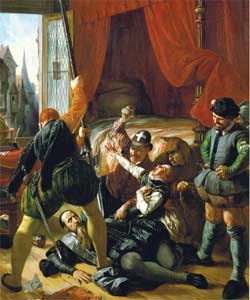
In the weeks that followed the massacre in Paris, between 2 and 5,000 more Huguenots were killed across France as the news of the massacre arrived in the country's cities, setting off copycat massacres of the local Protestant populations. At Bordeaux the massacre occurred after a Jesuit preached a sermon "on how the Angel of the Lord had already executed God's judgment in Paris, Orl